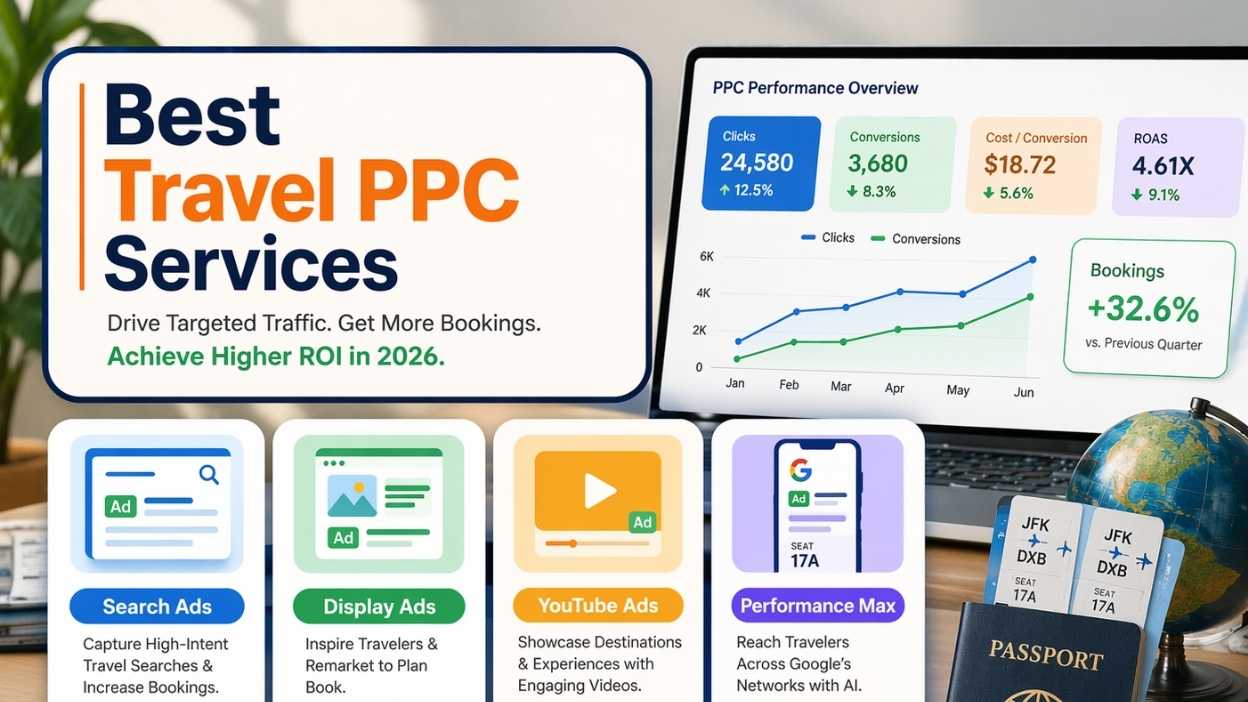

Travel marketing in 2026 feels a bit like trying to sell beach holidays during office meetings. People want the escape, but they also want proof, price clarity, flexible options, and the confidence to click without regret.
That is exactly why smart paid search matters.
If you run a tour company, travel agency, hotel brand, destination service, or vacation business, you already know one thing. Traffic alone does not pay the bills. Bookings do. Qualified leads do. Strong return on ad spend does.
That is where travel PPC services come in.
A strong travel PPC agency does more than launch ads and hope for the best. It builds campaigns around search intent, landing page relevance, conversion tracking, audience signals, and budget control. Google itself highlights these as core factors behind better ad performance, stronger Quality Score, and improved conversion outcomes.
In this guide, you will learn what makes travel industry PPC services effective in 2026, how to choose the right PPC agency for travel companies, and why the best PPC marketing for travel agencies now depends on relevance, measurement, and honest strategy more than flashy promises.
Why travel brands still need PPC in 2026
Travel demand remains strong, and long-term travel research still points upward. Google, Deloitte, and industry partners have projected a 60 percent increase in international travellers by 2040, which shows the category has long-run momentum.
But demand alone does not mean easy conversions.
Travel buyers compare everything. They check destinations, flights, reviews, cancellation terms, travel dates, baggage details, room quality, and price differences that can feel oddly personal. Someone will absolutely abandon a booking over twelve dollars and then spend twice that on airport coffee. Humanity is complex.
Because the journey is full of comparison, search ads remain powerful. They let you appear when someone searches with intent. That could mean:
- luxury honeymoon packages in bali
- family holiday packages from chicago
- last minute europe tour deals
- best safari tours in kenya
- private golden triangle tour india
Those searches are not casual browsing. They signal commercial intent. A good travel ppc agency helps you show up at the moment the buyer is already moving toward a decision.
Google Ads also supports precise location targeting, audience strategy, Smart Bidding, and conversion measurement. Those tools help travel businesses spend more on what actually drives bookings and less on vanity clicks.
What travel PPC services actually include
Many agencies sell PPC as if it is one simple product. It is not.
Real travel PPC services usually include several connected pieces.
Keyword research based on booking intent
Travel campaigns fail when they chase broad traffic and ignore intent. A campaign targeting cheap travel or best vacation may attract a huge audience, but that audience often includes dreamers, not buyers.
A smarter agency groups keywords by intent, such as:
- destination research
- package comparison
- booking ready searches
- branded searches
- seasonal travel offers
- tour type searches
- hotel or flight specific searches
This matters because Google recommends using words people actually search for in prominent page elements, while also keeping the content helpful and useful for humans first.
Search ad creation
Google’s ad guidance is clear. Responsive Search Ads work best when advertisers provide varied, relevant headlines and descriptions so the system can test combinations and improve performance. Ad Strength, relevance, and clarity matter.
For travel, that means ad copy should match the search closely.
If someone searches for family dubai package from new york, the ad should not lead with a vague line like Explore the World with Us.
It should say something much closer to the offer.
That is not magic. That is matching intent.
Landing page optimization
This is where many campaigns quietly lose money.
Google states that landing page experience affects Quality Score and that useful, relevant, easy-to-navigate pages improve user experience and ad performance. Google also advises that landing pages should match the ad and keyword closely.
For travel brands, that means the page should clearly show:
- destination or package details
- dates or availability cues
- pricing or starting price
- inclusions and exclusions
- trust signals
- easy inquiry or booking steps
- mobile-friendly layout
If your ad promises a Maldives honeymoon package and the visitor lands on a generic homepage with ten menu options and zero obvious next step, your budget starts leaking immediately.
Conversion tracking
You cannot improve what you do not measure. Google Ads stresses the importance of setting up conversion actions so campaign data can be used to refine performance and align bidding with business goals.
For travel brands, valuable conversions may include:
- package inquiry forms
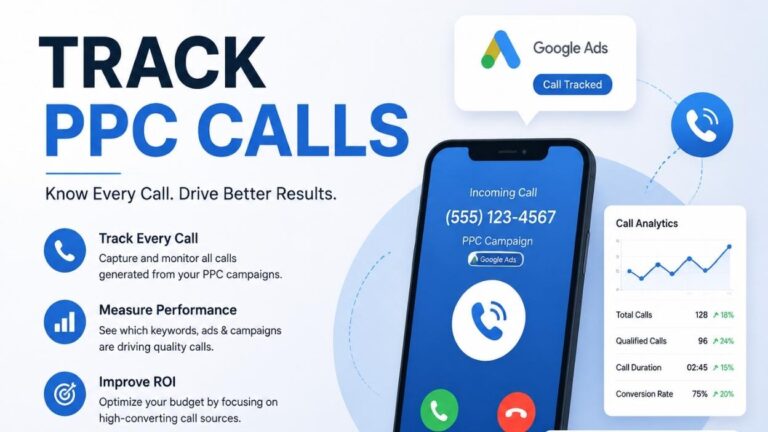
- phone calls
- WhatsApp clicks
- brochure downloads
- booking completions
- quote requests
- newsletter signups for retargeting
A strong PPC agency for travel companies does not stop at clicks. It tracks business outcomes.
Bidding and budget management
Google’s Smart Bidding uses auction-time signals to optimize for conversions or conversion value. That makes it useful for travel campaigns where user intent, device, time, and geography can change fast.
Still, automation is not a replacement for thinking.
A good agency knows when to use automated bidding, when to split campaigns by destination or season, and when to protect budget from low-intent traffic.
Machines are helpful. They are not travel planners. Yet.
Why travel businesses need a specialist agency
A generalist agency may know paid media. That helps.
But travel has its own quirks.
Search behavior changes with weather, school holidays, visa updates, destination trends, exchange rates, and even what people binge-watch on streaming platforms. Travel inspiration now comes from multiple channels, and video remains a major source of inspiration for leisure travel according to Google travel research.
That means travel industry PPC services need category understanding, not just platform access.
A travel specialist is more likely to understand:
- peak booking windows
- domestic vs international intent
- lead quality by destination
- mobile booking behavior
- short-haul vs long-haul search patterns
- high-margin package strategy
- seasonal campaign planning
- urgency messaging without sounding pushy
A general agency might say let us increase traffic.
A sharp travel ppc agency asks better questions.
Which destinations produce the best margin
Which packages close faster on phone calls
Which locations bring low-quality leads
Which landing pages create hesitation
Which search terms waste spend
That difference shows up in ROI.
What higher ROI really means in travel PPC
A lot of agencies talk about ROI as if it is a decorative word they place in slide decks next to arrows pointing upward.
Real ROI in travel PPC is more practical.
It often means:
- lower cost per qualified lead
- higher booking conversion rate
- better return on ad spend
- less wasted spend on irrelevant traffic
- stronger lead quality
- more bookings from high-intent searches
Google’s own guidance points to the same building blocks. Better ad relevance, stronger landing page experience, quality conversion tracking, and smarter optimization improve outcomes.
So if an agency promises instant success without talking about tracking, landing pages, and search intent, that is not a growth plan. That is a motivational poster.
How the best travel PPC services work in 2026
They build around user intent, not just volume
Big keyword volume can look exciting. It can also destroy efficiency.
The best agencies build campaigns around intent clusters such as:
Research stage
Searches like best places to visit in italy in summer or bali honeymoon cost
Comparison stage
Searches like bali honeymoon package vs thailand honeymoon package
Booking stage
Searches like book bali honeymoon package from usa
Different stages need different ads and landing pages.
They match ads to landing pages closely
Google directly recommends that landing pages should closely match ads and keywords. That improves ad relevance and landing page experience.
For travel companies, this means one campaign should not dump every click onto the same generic offers page.
A Dubai tour ad should go to a Dubai page.
A Europe family vacation ad should go to a Europe family page.
A luxury safari ad should not land on a page that also pushes backpacker hostels.
That sounds obvious, yet many brands still do it.
They optimize for mobile experience
Travel research often starts on mobile. Google’s travel case studies and mobile-focused guidance have long shown how mobile moments shape booking behavior and how mobile-ready experiences can drive strong gains.
That means travel landing pages should load fast, show key details early, and make inquiry actions easy. No one wants to pinch-zoom through a package page while standing in line at a cafe.
They use audience and location signals wisely
Google Ads allows detailed geographic targeting and audience reporting, which matters for travel campaigns because intent varies by origin market, language, and destination interest.
For example, a travel company may want separate campaigns for:
- usa outbound luxury travelers
- uk family holiday seekers
- india to bali honeymoon packages
- local destination activities near specific cities
That segmentation helps budgets stay focused.
They measure leads properly
Google encourages advertisers to set up specific conversion actions and even distinguish between different conversion types.
For travel, not all leads deserve equal value.
A generic contact form is not always equal to a high-intent custom itinerary request. The best ppc marketing for travel agencies accounts for that difference.
Signs you need a better travel PPC agency
You may need a stronger partner if:
- your click volume is rising but bookings are flat
- your leads ask for services you do not offer
- your ads target too many broad keywords
- your landing pages feel generic
- your team cannot explain conversion tracking clearly
- reports focus on clicks instead of revenue or lead quality
- the agency never talks about search intent or page relevance
A good PPC agency for travel companies should connect campaign performance to real business goals. That is where trust grows.
How to choose the right PPC agency for travel companies
Do not choose based only on price.
Choose based on fit, clarity, and method.
Look for an agency that can explain:
Their keyword strategy
Can they separate awareness keywords from booking keywords
Their landing page process
Do they review message match, mobile UX, and conversion flow
Their measurement setup
Can they define primary and secondary conversions
Their optimization method
Do they use search term reviews, negative keywords, ad testing, and budget control
Their reporting style
Do they show lead quality, booking trends, and conversion value
Their understanding of travel
Do they understand seasonality, destination behavior, and buyer hesitation
If they only talk about impressions and reach, keep looking.
Travel brands need revenue, not applause.
Why trust matters more in 2026
Google’s guidance on helpful content is simple. Create content for people first, make it reliable, and focus on satisfying user needs rather than manipulating rankings.
That principle matters for ad traffic too.
Your ads can win the click, but trust wins the booking.
Travel buyers want signs that your business is real and dependable. Your landing pages should include:
- clear company details
- accurate package information
- honest pricing cues
- strong contact options
- real policies
- destination expertise
- reviews or proof points where available
That mix supports conversions and improves your brand credibility.
The role of AI in travel PPC without losing the human touch
Google Ads now uses automation heavily across bidding, budget allocation, creative combinations, and campaign optimization. Performance Max and Smart Bidding are part of that shift.
That does not mean humans matter less.
It means good agencies now do more strategic work.
They shape the inputs. improve landing pages. They define conversion goals. They control structure. They judge creative quality. They understand buyer emotion.
AI can help decide which headline wins more clicks. It still cannot fully explain why one family trusts a brand and another bounces after three seconds because the page feels vague.
In travel, emotion matters. So does clarity.
You need both.
Final thoughts
The best travel PPC services in 2026 do not rely on random hacks, inflated metrics, or shiny dashboards.
They rely on relevance.
The use real search intent, strong ad copy, focused landing pages, proper conversion tracking, smart bidding, and honest reporting. They understand that a travel ppc agency should help you generate qualified leads and profitable bookings, not just more traffic.
If you want stronger performance, choose a partner that understands travel behavior, not just ad buttons.
Because in this industry, every click has a cost.
But the right click can fill a seat, sell a package, or start a long-term customer relationship.
And that is what higher ROI actually looks like.