
Every business wants more traffic, leads, sales, and brand visibility. But the big question is simple: should you invest in PPC or SEO? In 2026, this question has become even more important because online competition is high, ad costs are changing, and users are comparing brands more carefully before making a decision.
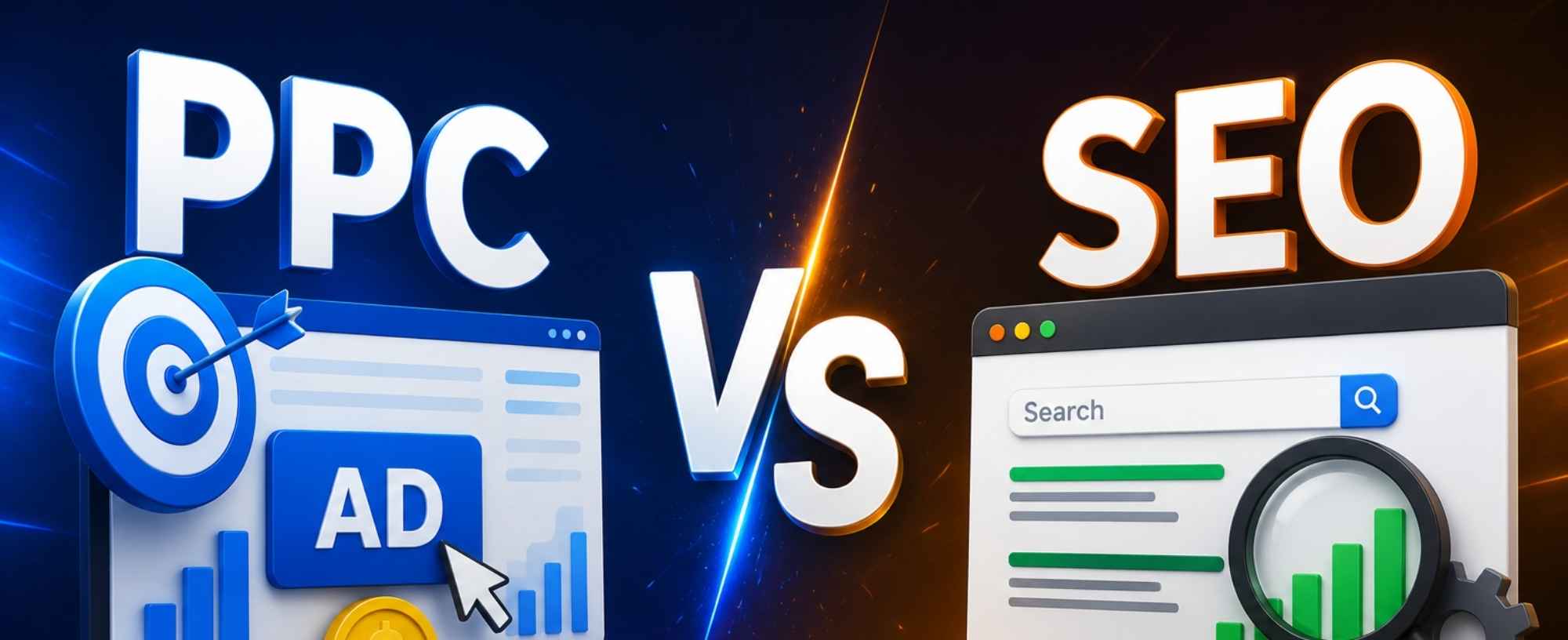
PPC and SEO both help businesses appear on search engines, but they work in different ways. PPC gives paid visibility through ads, while SEO builds organic visibility through content, website optimization, and authority. One brings faster traffic, and the other creates long-term growth. The best choice depends on your budget, goals, timeline, competition, and business model.
For many businesses, the smartest answer is not PPC or SEO alone. A balanced strategy can often work better. PPC helps generate quick leads and test offers, while SEO helps build trust, reduce long-term dependency on ads, and attract consistent traffic. A growth-focused digital agency like Adyorbit can help businesses choose the right mix based on real goals.
Google explains that SEO helps search engines crawl, index, and understand your content, while Google Ads lets advertisers control bids and budgets for paid campaigns. This means both channels are useful, but they solve different business needs.
1. What PPC and SEO Mean for Business in 2026
PPC stands for pay-per-click. It is a paid advertising model where businesses pay when someone clicks on their ad. These ads can appear on Google Search, YouTube, display networks, shopping results, and other digital platforms. PPC is useful when a business wants quick visibility, fast traffic, and measurable lead generation.
SEO stands for search engine optimization. It is the process of improving your website so it can rank organically on search engines. SEO includes keyword research, on-page optimization, technical SEO, content creation, internal linking, backlinks, local SEO, and user experience improvement. It takes time, but it can create strong long-term value.
PPC Meaning in Simple Words
PPC is like paying for a premium position. When your target customer searches for a product or service, your ad can appear at the top of the search results. If the person clicks your ad, you pay for that click. If the campaign is well managed, that click can turn into a lead or sale.
For example, if a clinic wants appointment calls, PPC can show ads to people searching for treatment in a specific location. If an eCommerce business wants product sales, PPC can show shopping ads to users who are ready to compare and buy.
SEO Meaning in Simple Words
SEO is like building your website’s natural authority. Instead of paying for each click, you improve your website so Google can understand your content and show it to users organically. This includes helpful pages, proper website structure, fast loading speed, relevant keywords, and strong content.
SEO does not usually bring instant results, but it can give long-term benefits. Once your pages start ranking, they can bring traffic regularly without paying for every single click. This is why SEO is often seen as a long-term business asset.
Why the Comparison Matters in 2026
In 2026, users are more aware and selective. They do not click only the first result blindly. They compare reviews, websites, content quality, offers, and trust signals. That is why both PPC and SEO need strong strategy. A paid ad with a weak landing page can waste money. A good blog without proper SEO can remain invisible.
Adyorbit helps businesses understand where they currently stand and what they need first. Some businesses need PPC for quick leads. Some need SEO for authority. Some need both together for faster and stronger growth.
2. PPC for Business: Cost, Speed and Benefits
PPC is one of the fastest ways to bring targeted traffic to your website. If your campaign is set up correctly, ads can start appearing soon after launch. This makes PPC useful for businesses that want immediate visibility, quick lead generation, product promotion, seasonal campaigns, or market testing.
However, PPC success depends on proper setup and management. A campaign needs the right keywords, ad copy, targeting, budget, landing page, tracking, and optimization. Without these elements, businesses may get clicks but not conversions. This is why hiring a professional PPC agency like Adyorbit can make a difference.
PPC Cost in 2026
PPC cost is not fixed. It depends on keyword competition, location, audience, industry, quality of ads, landing page experience, and bidding strategy. Some industries have low cost per click, while competitive industries like real estate, finance, education, healthcare, legal services, and software may have higher ad costs.
Google Ads calculates budgets daily, and Google says monthly budget can be estimated by multiplying the daily budget by 30.4. This helps advertisers plan their monthly spending more clearly.
| PPC Cost Factor | Meaning | Business Impact |
|---|---|---|
| Keyword Competition | How many advertisers target the same keyword | Higher competition can increase CPC |
| Location Targeting | Area where ads are shown | Narrow targeting can reduce waste |
| Landing Page Quality | Relevance and usefulness of the page | Better pages can improve performance |
| Ad Copy Quality | Strength of headline and message | Better copy can improve CTR |
| Conversion Tracking | Measuring calls, forms, or sales | Helps optimize campaigns properly |
A business should not look at PPC cost only as spending. It should look at cost per lead, cost per sale, and return on investment. If a campaign spends more but brings profitable customers, it may still be valuable. If a campaign gets cheap clicks but no leads, it is not useful.
Benefits of PPC for Business
PPC is helpful because it gives control. You can control budget, location, keywords, timing, device, audience, and campaign goal. If something is not working, it can be changed quickly. This makes PPC suitable for businesses that want measurable performance.
PPC also helps test business ideas. For example, if a company wants to launch a new service, it can run ads to check demand before investing heavily in SEO content. This quick feedback can help improve offers, pricing, landing pages, and messaging.
When PPC Is Better
PPC is usually better when a business needs quick results. It is also useful when launching a new website that has no organic ranking yet. If the business has a limited-time offer, event, course admission, product launch, or urgent lead target, PPC can support faster visibility.
However, PPC should not run without proper tracking. Adyorbit can help businesses set up campaigns with lead tracking, call tracking, keyword optimization, and landing page suggestions. This helps reduce wasted spend and improve campaign quality.
3. SEO for Business: Long-Term Growth and Trust
SEO is one of the strongest long-term digital marketing strategies. It helps your website appear organically when users search for products, services, questions, comparisons, and solutions. Unlike PPC, SEO does not charge you for every click. Once your pages rank, they can keep bringing traffic over time.
SEO is not instant, but it builds trust. Many users trust organic results because they feel more natural. A website that ranks for useful keywords, publishes helpful content, answers customer questions, and has strong service pages can create a better brand impression.
SEO Cost in 2026
SEO cost depends on website size, competition, content requirements, technical issues, local targeting, backlinks, and business goals. A small local business may need basic local SEO and service page optimization. A national brand may need advanced content strategy, technical SEO, authority building, and regular publishing.
The cost of SEO should be viewed as an investment. You are not just paying for rankings. You are improving your website structure, content quality, user experience, and long-term search presence. Google’s guidance also highlights creating helpful, reliable, people-first content for users rather than content made only to manipulate rankings.
Benefits of SEO for Business
SEO helps build long-term visibility. It can bring traffic from many types of keywords, including service keywords, local keywords, informational keywords, comparison keywords, and question-based searches. This creates more opportunities for users to discover your brand.
SEO also improves website quality. During SEO work, businesses often improve page speed, content clarity, internal links, headings, meta descriptions, images, URLs, and mobile experience. These improvements can help both rankings and user experience.
When SEO Is Better
SEO is better when a business wants long-term growth, brand authority, and consistent organic traffic. It is especially useful for service businesses, blogs, education brands, healthcare websites, local businesses, eCommerce stores, B2B companies, and professional agencies.
SEO is also useful when users need education before buying. For example, people may search for guides, comparisons, pricing information, benefits, and FAQs before contacting a company. SEO content can capture these users early and build trust before they are ready to buy.
4. PPC vs SEO: Cost, ROI, Speed and Lead Quality
The difference between PPC and SEO becomes clearer when you compare cost, speed, ROI, and lead quality. PPC can produce faster traffic, but it needs continuous ad spend. SEO takes time, but it can reduce dependence on paid traffic in the long run.
Both channels can generate strong ROI when managed properly. PPC ROI depends on targeting, cost per click, conversion rate, landing page, and sales value. SEO ROI depends on rankings, traffic quality, content performance, technical health, and conversion optimization.
PPC vs SEO Comparison Table
| Factor | PPC | SEO |
|---|---|---|
| Result Speed | Faster visibility after campaign launch | Slower but more stable growth |
| Cost Type | Pay for clicks and management | Pay for optimization and content |
| Traffic Duration | Stops when budget stops | Can continue after rankings improve |
| Best For | Quick leads, offers, testing, launches | Long-term traffic, trust, authority |
| Control | High control over targeting and budget | Less immediate control over rankings |
| Trust Factor | Depends on ad and landing page | Often stronger through organic presence |
| Long-Term Value | Needs regular ad spend | Builds digital asset over time |
This table shows that PPC and SEO are not enemies. They are different tools. PPC works like a performance engine for immediate demand. SEO works like a foundation for long-term discovery and trust. The right choice depends on what your business needs now and what it wants to build for the future.
ROI Difference Between PPC and SEO
PPC ROI can be measured quickly because every click, lead, call, and sale can be tracked. If a campaign spends ₹50,000 and generates leads worth more than the cost, it can be considered profitable. But if tracking is weak, it becomes difficult to understand real performance.
SEO ROI takes longer to measure, but it can become powerful over time. A service page or blog that ranks well can bring leads for months or even years. This makes SEO valuable for businesses that want sustainable traffic without paying for every visit.
Lead Quality Difference
PPC lead quality depends on targeting. If ads are shown for broad or irrelevant keywords, lead quality may be low. If campaigns use strong intent keywords, negative keywords, clear ad copy, and relevant landing pages, PPC can bring high-quality leads.
SEO lead quality depends on content intent. A user reading a detailed service page, comparison guide, or FAQ may already trust the brand before contacting. This can improve lead quality because the user is more informed. Adyorbit can help align both PPC and SEO with business intent.
5. Which Is Better for Your Business in 2026?
The answer depends on your business situation. PPC is better if you need fast traffic, quick leads, immediate testing, or short-term campaign results. SEO is better if you want long-term visibility, brand trust, content authority, and lower dependency on paid ads.
For most businesses in 2026, the best strategy is a combination of PPC and SEO. PPC can bring leads while SEO is growing. SEO can later reduce pressure on ad budgets. Together, they can create a stronger digital marketing system.
Choose PPC If You Need Fast Leads
PPC is a good choice if your business needs leads quickly. For example, if you are launching a service, promoting an offer, filling course seats, getting appointment bookings, or testing a new market, PPC can help bring fast visibility.
PPC is also useful when your website is new and does not rank organically yet. Instead of waiting months for SEO, you can start with paid campaigns and use the data to understand what keywords, offers, and locations perform best.
Choose SEO If You Want Long-Term Growth
SEO is a better choice when you want to build long-term authority. If your business depends on customer trust, information, and repeated discovery, SEO can help create a strong online presence. It is especially useful for service businesses, local brands, and industries where users compare before buying.
SEO also helps you cover more search intent. You can create pages for services, locations, FAQs, comparisons, pricing guides, and educational blogs. This gives your website more chances to appear at different stages of the customer journey.
Choose Both If You Want Balanced Growth
The strongest approach is often PPC plus SEO. PPC can generate immediate leads, while SEO builds long-term traffic. PPC data can also help SEO. For example, keywords that perform well in ads can become topics for SEO pages and blogs.
Adyorbit can help businesses create a combined strategy where PPC and SEO support each other. Instead of treating them separately, the agency can connect paid campaign data, keyword research, landing page improvement, content planning, and conversion tracking.
6. How Adyorbit Helps with PPC and SEO Strategy
Adyorbit can help businesses make the right decision between PPC, SEO, or both. The agency can study your business goals, current website performance, competition, budget, target audience, and timeline. After that, it can suggest a practical strategy that fits your growth needs.
A good strategy does not copy what every competitor is doing. It focuses on your exact business stage. A new company may need PPC first. An established company may need stronger SEO. A growing brand may need both to increase market share.
Adyorbit’s PPC Approach
Adyorbit can manage PPC campaigns with a focus on quality traffic and measurable conversions. This includes keyword planning, ad copy creation, campaign structure, landing page guidance, conversion tracking, budget control, and regular optimization.
Google says Quality Score is a diagnostic tool that compares ad and landing page usefulness against other advertisers, and landing page messaging should match user expectations. This is why Adyorbit’s PPC strategy should focus not only on ads but also on landing page relevance.
Adyorbit’s SEO Approach
Adyorbit can support SEO through keyword research, technical SEO, content planning, on-page optimization, local SEO, internal linking, blog strategy, and performance tracking. The aim is to help businesses attract relevant users through organic search.
SEO is not only about adding keywords. It is about making pages useful, clear, crawlable, and trustworthy. A strong SEO plan improves both search visibility and user experience. This helps businesses create long-term digital strength.
How Adyorbit Combines PPC and SEO
Adyorbit can use PPC data to improve SEO decisions. If a paid keyword brings good leads, it can be used for a dedicated SEO landing page. If a PPC landing page converts well, its structure can guide organic pages. This makes both channels smarter.
Similarly, SEO content can support PPC campaigns. A user may click an ad, then read blogs, check service pages, compare benefits, and return later. When paid and organic channels work together, the brand appears stronger and more trustworthy.
PPC vs SEO Decision Guide
| Business Goal | Better Choice | Reason |
|---|---|---|
| Need leads quickly | PPC | Faster visibility and traffic |
| Build long-term trust | SEO | Organic presence creates authority |
| Launch new offer | PPC | Good for quick testing |
| Reduce ad dependency | SEO | Builds traffic without paying per click |
| Grow local visibility | SEO + PPC | Combines maps, organic, and ads |
| Improve conversions | PPC + SEO | Better landing pages help both |
For many businesses, the answer is not one channel. The answer is the right order and right balance. Adyorbit can help decide whether to start with PPC, invest in SEO, or run both together based on goals and budget.
Final Thoughts
PPC and SEO both have important roles in business growth. PPC gives speed, control, and quick visibility. SEO gives trust, organic traffic, and long-term value. In 2026, the best strategy depends on your business goal, competition, budget, and timeline.
If your business needs leads quickly, PPC can be the right first step. If your business wants long-term authority, SEO should be a priority. If you want faster and sustainable growth, using PPC and SEO together can create a stronger marketing system.
Adyorbit can help businesses choose the right strategy, manage campaigns, improve website visibility, and generate better results. With the right balance of PPC and SEO, your business can attract more relevant users, improve conversions, and build stronger digital growth in 2026.
FAQs About PPC vs SEO in 2026
1. Is PPC better than SEO for business in 2026?
PPC is better if your business needs quick leads, fast visibility, and immediate campaign testing. SEO is better for long-term growth, organic traffic, and brand trust. For many businesses, using both PPC and SEO together gives better results.
2. Is SEO cheaper than PPC?
SEO may become more cost-effective in the long run because you do not pay for every click. However, SEO still needs investment in content, technical work, optimization, and authority building. PPC needs continuous ad spend to keep traffic coming.
3. Which gives faster results: PPC or SEO?
PPC gives faster results because ads can start showing soon after campaign approval and launch. SEO takes longer because search engines need time to crawl, understand, and rank pages. However, SEO results can last longer when maintained properly.
4. Which gives better ROI: PPC or SEO?
Both can give good ROI. PPC ROI is easier to measure quickly because clicks, leads, and conversions are tracked directly. SEO ROI takes more time but can become stronger over the long term because organic traffic can continue without paying for each click.
5. Should small businesses use PPC or SEO?
Small businesses can use both, but the priority depends on goals. PPC is useful for quick leads and local campaigns. SEO is useful for long-term visibility and trust. A small business can start with focused PPC and build SEO gradually.
6. Can PPC help SEO?
PPC does not directly improve organic rankings, but PPC data can support SEO strategy. High-converting keywords from paid campaigns can be used for SEO content, landing pages, and blog topics. This helps improve content planning and keyword selection.
7. Why choose Adyorbit for PPC and SEO?
Adyorbit can help businesses create a balanced digital marketing strategy with PPC and SEO. The agency can support paid ads, keyword research, content planning, technical SEO, local SEO, conversion tracking, and campaign optimization for better business growth.