
In a business world where customer expectations keep rising, spreadsheets and scattered tools are no longer enough. Companies need a better way to manage leads, track sales, support clients, automate follow-ups, and improve team coordination. This is where professional CRM development services online become valuable. A well-built CRM system helps businesses organize customer data, streamline workflows, and create a more consistent customer experience.
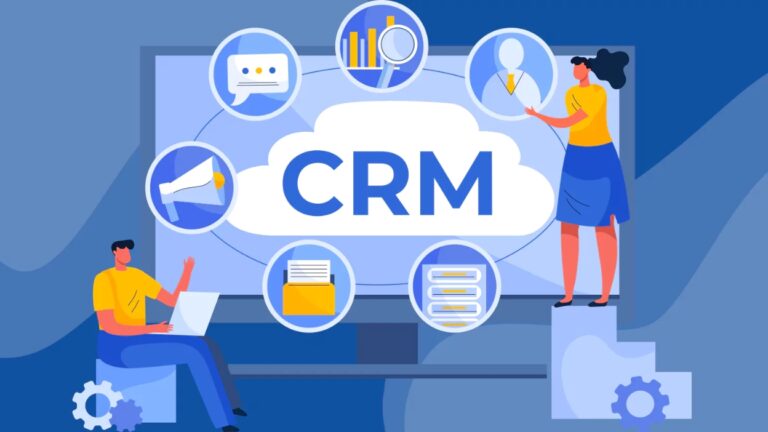
CRM stands for Customer Relationship Management. But in practical terms, it means much more than just storing customer names and phone numbers. A CRM becomes the operational center of your sales, support, and marketing activities. It gives your team one place to manage every interaction, every opportunity, and every stage of the customer journey.
Professional CRM development services online help businesses move beyond generic software limitations. Instead of adjusting your operations to fit a ready-made platform, custom CRM development allows the software to match your business model, team structure, and long-term goals. Whether you are a startup, a growing company, or a large enterprise, a properly developed CRM can improve productivity, reporting, customer retention, and revenue generation.
What Are CRM Development Services?
CRM development services involve designing, building, customizing, integrating, and maintaining CRM software that helps businesses manage customer relationships more effectively. These services may include custom CRM development from scratch, modifying an existing CRM platform, integrating third-party tools, improving user experience, adding automation features, and building dashboards or reports.
Many businesses start with off-the-shelf CRM tools, but over time they face challenges. Some systems are too basic. Some are overloaded with features they do not need. Others fail to fit team workflows, industry requirements, or internal processes. That is when professional CRM development services online become the right solution.
A CRM development team can create systems tailored to your exact needs, such as:
- Lead and contact management
- Sales pipeline tracking
- Customer support ticketing
- Task and reminder automation
- Email and communication history
- Marketing campaign tracking
- Reporting and analytics dashboards
- Mobile access for field teams
- Role-based user permissions
- Integration with billing, ERP, or eCommerce systems
The goal is not simply to build software. The goal is to create a system that helps your team work smarter and serve customers better.
Why Businesses Need Professional CRM Development Services Online
Businesses today manage customer information from many different channels. Leads may come from websites, social media, WhatsApp, calls, ads, email campaigns, or referrals. If this data is spread across multiple platforms, teams lose visibility. Salespeople miss follow-ups. Support requests fall through gaps. Managers cannot track performance accurately.
Professional CRM development services online solve these problems by centralizing customer data and making it more actionable.
Here are some of the main reasons businesses invest in CRM development:
Better Customer Data Management
A CRM system stores all key customer information in one place. This includes contact details, purchase history, communication records, support interactions, notes, and follow-up actions. Instead of searching through emails or multiple files, your team gets a complete customer view instantly.
Improved Sales Performance
Sales teams perform better when they have a clear pipeline. A CRM allows you to track each lead from first contact to final conversion. It also helps assign leads, set reminders, monitor deal stages, and identify bottlenecks in the sales process.
Stronger Customer Support
Support teams need quick access to customer history. A custom CRM can help them view previous complaints, open tickets, service requests, and account activity. This improves response speed and makes customer service more personal and efficient.
Workflow Automation
Manual processes slow businesses down. CRM development allows automation of routine tasks like sending welcome emails, assigning leads, updating statuses, generating invoices, creating reminders, or notifying managers about important actions.
Accurate Reporting and Insights
Without clear reporting, decision-making becomes guesswork. A professional CRM can provide customized dashboards showing sales performance, customer activity, conversion rates, response times, and team productivity. This helps business owners make informed decisions.
Business Scalability
As your business grows, your systems should grow with it. Custom CRM development ensures the platform can adapt to more users, more data, new departments, and changing workflows without causing confusion or slowing operations.
Benefits of Choosing Online CRM Development Services
The online service model makes CRM development more accessible and flexible for businesses of all sizes. Instead of depending only on local providers, companies can now work with specialized teams remotely and still receive high-quality solutions.
Access to Broader Expertise
Online CRM development services give businesses access to experienced developers, UI designers, project managers, and integration specialists from different regions. This makes it easier to find the right skill set for your project.
Faster Communication and Project Tracking
Modern online collaboration tools make remote CRM development highly efficient. Businesses can track milestones, review demos, share feedback, and communicate with the development team in real time.
Cost Efficiency
Online CRM development often reduces overhead costs compared to traditional in-office software projects. Businesses can choose service packages, phase-wise development, or custom engagement models that fit their budget.
Flexible Support and Maintenance
A CRM is not a one-time build. It needs updates, bug fixes, improvements, and scaling support. Online CRM development teams often provide ongoing technical support, helping businesses keep the system updated and functional.
Easy Integration with Cloud Tools
Today’s businesses use cloud tools for email, accounting, communication, marketing, and file storage. Online CRM development services are often designed with cloud compatibility in mind, making integrations smoother and more practical.
Custom CRM vs Ready-Made CRM
One of the biggest questions businesses ask is whether they should use a ready-made CRM or invest in custom CRM development. Both options have value, but they serve different needs.
A ready-made CRM can be useful for businesses with simple workflows and limited customization needs. It is faster to start with and may be enough during early growth stages. However, as operations become more complex, limitations begin to appear.
A custom CRM offers more flexibility and control.
Ready-Made CRM
Pros:
- Faster setup
- Lower initial cost
- Standard features available immediately
- Suitable for general use cases
Cons:
- Limited customization
- Monthly subscription costs can grow
- Features may not match your workflow
- Integration limits may affect operations
- User experience may feel generic
Custom CRM
Pros:
- Built for your business processes
- Greater control over features and access
- Easier integration with internal systems
- Better long-term scalability
- Unique workflow automation options
Cons:
- Higher initial development cost
- Requires planning and collaboration
- Development time may be longer
For many businesses, the right answer depends on how unique their operations are. If your team needs specific workflows, reporting structures, user roles, or industry features, professional CRM development services online become a strategic investment rather than just a software expense.
Key Features of a Professional CRM System
A high-quality CRM should not feel complicated. It should feel useful. The best CRM systems combine functionality with ease of use. Here are some important features that businesses often request during development.
Contact and Lead Management
This is the foundation of any CRM. It allows teams to store customer records, categorize contacts, track source channels, and manage lead movement through the sales funnel.
Sales Pipeline Management
Sales teams need visibility into every deal stage. A CRM should show progress clearly, from inquiry to negotiation to closure. This helps improve accountability and forecasting.
Task and Activity Tracking
Every follow-up matters. CRM systems should help users schedule calls, meetings, emails, and reminders so opportunities are not lost.
Communication History
A professional CRM should track communication across calls, emails, notes, and messages. This creates context for every team member interacting with the customer.
Reporting Dashboard
A good CRM provides business intelligence. Custom dashboards can display sales targets, lead sources, revenue trends, team activity, customer retention, and more.
User Role Management
Not every employee needs access to everything. Role-based access ensures the right people see the right information while protecting sensitive business data.
Workflow Automation
Automation improves speed and accuracy. Examples include lead assignment, automated follow-ups, status changes, alerts, and customer notifications.
Mobile Responsiveness
Sales and support teams often work on the move. A CRM should function smoothly across devices, especially smartphones and tablets.
Integration Capabilities
A CRM becomes more powerful when connected to other tools. Common integrations include email marketing platforms, payment gateways, accounting systems, websites, chat tools, and customer support software.
Industries That Benefit from CRM Development Services
CRM systems are no longer limited to large corporations. Today, businesses across many sectors need organized customer management and automation.
Industries that commonly benefit include:
- Real estate
- Healthcare administration
- Education and training
- Finance and insurance
- Travel and hospitality
- eCommerce
- Manufacturing
- IT and software services
- Marketing agencies
- Logistics and supply chain
- Legal and consulting firms
Each industry has different needs. A real estate company may need property inquiry tracking and broker assignment. A healthcare business may need appointment management and communication logs. An eCommerce brand may need order tracking, customer segmentation, and repeat purchase automation. That is why custom CRM development matters so much.
The CRM Development Process
Businesses often worry that software development is too technical or difficult to manage. A professional CRM development team simplifies the process through structured stages.
1. Requirement Analysis
The first step is understanding your business. This includes team workflows, pain points, goals, system gaps, and feature requirements. A clear requirement phase prevents confusion later.
2. Planning and Architecture
Once requirements are clear, the team creates a development plan. This includes system architecture, user roles, database structure, workflow mapping, and integration planning.
3. UI and UX Design
The CRM interface should be simple, clean, and practical. Designers create layouts that help users complete tasks quickly without confusion.
4. Development
The development team builds the CRM modules, features, workflows, dashboards, and integrations. Depending on project size, this may happen in phases.
5. Testing
Before launch, the CRM should be tested for performance, usability, security, bugs, and compatibility across devices and browsers.
6. Deployment
After testing, the system is deployed on the chosen server or cloud infrastructure. Users are onboarded and the CRM goes live.
7. Support and Improvement
Once the CRM is in use, feedback helps improve the platform. New features, performance updates, and workflow refinements are added over time.
How to Choose the Right CRM Development Company
Not all service providers offer the same quality. Choosing the right CRM development partner is just as important as choosing the right features.
Here are a few things businesses should look for:
Business Understanding
A good development team does not only understand coding. It understands business logic, user behavior, and process optimization.
Custom Development Experience
Look for a team with real experience in CRM customization, workflow automation, and third-party integrations.
Transparent Communication
You need a provider that communicates clearly, shares progress updates, listens to feedback, and explains technical details in simple language.
Scalable Development Approach
Your CRM should support future growth. Choose a team that thinks beyond launch and plans for long-term usability.
Ongoing Support
Technical support after launch is essential. Make sure the provider offers maintenance, upgrades, and issue resolution.
Security Awareness
CRM systems handle sensitive customer and business data. The development company should follow best practices for security, access control, and data protection.
Common Mistakes to Avoid in CRM Development
Even a strong CRM project can fail if planning is weak. Here are some common mistakes businesses should avoid.
One major mistake is trying to add too many features at once. A CRM should solve real workflow problems, not become overloaded with unnecessary complexity.
Another mistake is ignoring end users during development. If employees find the CRM difficult to use, adoption will be low. Usability matters as much as functionality.
Some businesses also fail to define clear objectives. Without knowing what success looks like, it becomes harder to measure performance after launch.
Poor integration planning is another issue. A CRM should work smoothly with existing systems instead of creating new silos.
Finally, many companies underestimate training and support. Even the best software needs proper onboarding and continuous improvement.
Why CRM Development Is a Long-Term Investment
Some businesses see CRM development as a cost. In reality, it is often a long-term investment in efficiency, customer retention, and growth. A well-developed CRM reduces manual work, improves team collaboration, and helps decision-makers act on real data.
It also strengthens customer relationships. When your team responds faster, follows up consistently, and understands customer history clearly, the customer experience improves. And when customer experience improves, loyalty and revenue often grow with it.
The real value of professional CRM development services online is not only in the software itself. It is in the way that software supports your business goals every day.
Final Thoughts
Professional CRM development services online are essential for businesses that want better control over customer relationships, sales workflows, team coordination, and long-term growth. A custom CRM does not just organize information. It creates structure, visibility, and efficiency across your operations.
Whether you need a system for lead tracking, support management, sales automation, reporting, or full business process integration, the right CRM solution can transform the way your company works. Instead of depending on scattered tools and manual processes, you gain one centralized platform designed around your real business needs.
As competition grows and customer expectations become higher, businesses need systems that are reliable, scalable, and easy to use. Investing in professional CRM development services online helps you build that foundation. It gives your team the tools to work smarter, respond faster, and build stronger customer relationships that last.
If your current tools are limiting productivity or creating confusion, now may be the right time to explore a CRM solution built specifically for your business. A professional approach today can create better performance, better service, and better growth tomorrow.