
In the world of digital marketing, two strategies dominate the landscape: Search Engine Optimization (SEO) and Pay-Per-Click (PPC) advertising. Both of these methods are aimed at increasing your online visibility, driving traffic to your website, and ultimately boosting conversions. However, the methods and underlying costs behind SEO and PPC are different. As a business, the question often arises: Which of these strategies yields the best ROI (Return on Investment)?
In this blog, we will dive deep into the PPC vs SEO ROI comparison, analyze the pros and cons of both, and explain how ranking differs when comparing PPC vs SEO. Along the way, we’ll also look at how Adyorbit, a leading digital marketing agency, can help businesses maximize their ROI using both SEO and PPC strategies.
What is SEO?
SEO, or Search Engine Optimization, is the process of optimizing a website to rank higher in the organic (unpaid) results of search engines like Google, Bing, and Yahoo. The goal of SEO is to increase the visibility of your website in search engine results pages (SERPs) for relevant queries, bringing organic traffic to your website.
The main components of SEO include:
- On-Page SEO: This involves optimizing the elements on your website such as titles, meta descriptions, headers, URL structure, and content. It’s about making sure your website is optimized for both search engines and users.
- Off-Page SEO: This refers to activities that happen outside of your website but help improve its ranking. It primarily involves building backlinks from authoritative websites.
- Technical SEO: This focuses on improving the technical aspects of your website, like page speed, mobile-friendliness, and secure connections (HTTPS).
- Content Creation: Quality, engaging content is key to improving your rankings. This includes blogs, articles, videos, infographics, and more.
What is PPC?
PPC, or Pay-Per-Click, is a form of paid digital advertising where you pay for each click on your ad. The most common platform for PPC is Google Ads (formerly known as Google AdWords), where businesses bid for ad placement on the search engine results page. When a user clicks on an ad, the business pays the search engine a fee.
Some key elements of PPC include:
- Ad Copy: The text and message that appears on the ad, which must be compelling and relevant to the search query.
- Keywords: The keywords you are bidding on that trigger your ads when users perform searches related to those keywords.
- Ad Positioning: The placement of the ad on the search results page, often determined by the amount you are willing to bid and the quality score of your ad.
- Landing Pages: The web pages users land on after clicking the ad. The experience on these pages significantly impacts the success of your PPC campaign.
SEO vs PPC Comparison
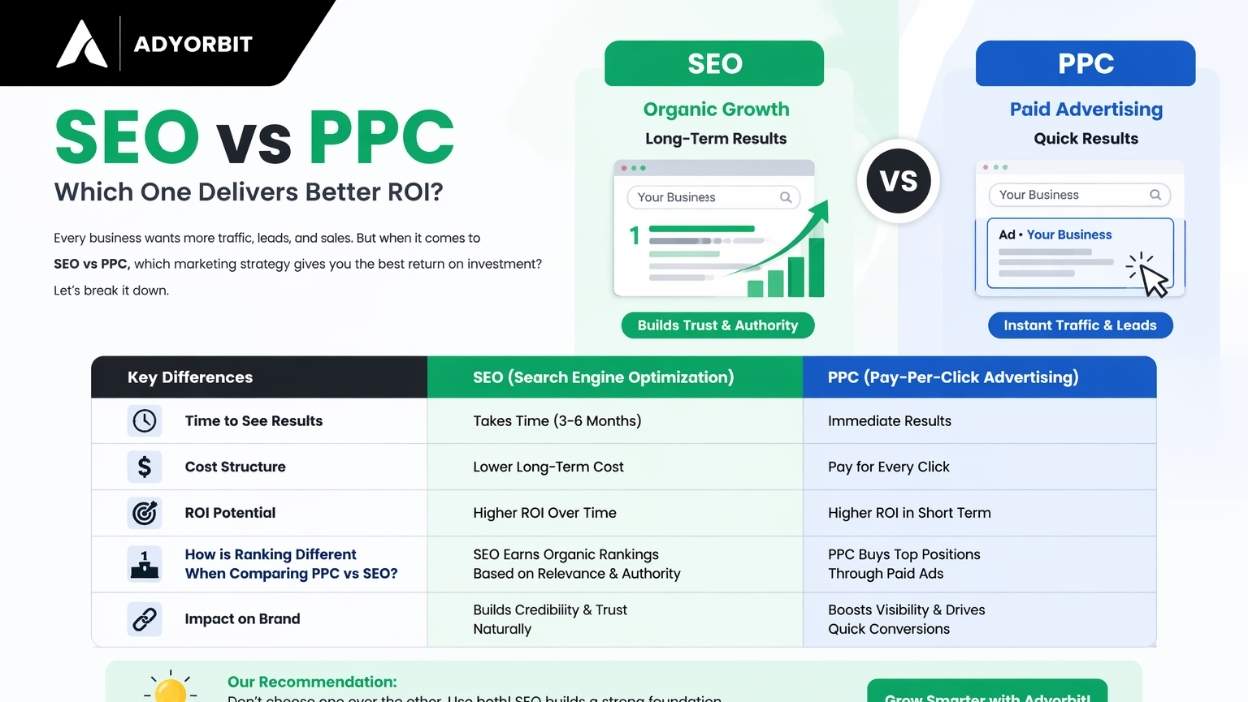
To better understand which strategy yields a better ROI, we need to break down the differences between SEO and PPC:
| SEO | PPC |
|---|---|
| Cost: Organic and long-term; no direct costs for clicks. | Cost: Requires an ongoing budget for bids; pay for each click. |
| Time to Results: Takes time (months) to see significant results. | Time to Results: Immediate results, as ads appear as soon as the campaign is live. |
| Sustainability: Once rankings are achieved, they can last for a long time. | Sustainability: Results stop when the budget is exhausted. |
| Traffic Quality: Attracts users who are actively looking for information, products, or services. | Traffic Quality: Paid traffic may not always convert as well as organic traffic. |
| Control: Limited control over organic rankings due to search engine algorithms. | Control: Full control over keywords, bids, and ad copy. |
| ROI: Typically, SEO yields better ROI in the long run due to lower ongoing costs. | ROI: High ROI in the short term but can be expensive over time. |
PPC vs SEO ROI
The ultimate goal of any marketing strategy is to maximize ROI. The same applies to SEO and PPC. Let’s explore how SEO vs PPC ROI compares.
SEO ROI:
SEO typically has a higher ROI than PPC in the long run. This is because once you achieve good rankings for your target keywords, the traffic you get from search engines is organic and free. In contrast, paid ads stop generating traffic once the budget is spent.
Some reasons why SEO tends to offer better ROI are:
- Long-Term Results: The traffic you gain from SEO can continue for months or even years after achieving top rankings.
- Cost-Effectiveness: Once the initial investment in SEO is made (i.e., website optimization, content creation), there are fewer ongoing costs compared to PPC.
- Brand Authority: High rankings can establish your brand as an authority in your niche, which helps with long-term trust and credibility.
However, it’s important to note that SEO requires a continuous effort. Regular content updates, backlink building, and technical optimizations are required to maintain rankings.
PPC ROI:
PPC offers immediate results and can provide a quick ROI if managed properly. Because you pay for each click, PPC campaigns can be costly, especially in competitive industries. However, with effective targeting, you can optimize your campaigns and drive high-quality leads quickly.
Some benefits of PPC are:
- Immediate Traffic: As soon as your ad is live, you start driving traffic.
- Highly Targeted: With PPC, you can target specific keywords, locations, demographics, and even times of day.
- Scalability: You can easily increase your budget to drive more traffic or reduce it if the ROI decreases.
The downside of PPC is that it requires ongoing investment, and the results stop once the budget is depleted.
How is Ranking Different When Comparing PPC vs SEO?
One of the biggest differences between PPC vs SEO is how the rankings are achieved. Let’s break down the differences:
SEO Ranking:
- Organic: SEO rankings are based on search engine algorithms that evaluate the relevance and quality of your content, backlinks, user experience, and other factors.
- Trust: Websites that rank organically are seen as more trustworthy and credible by users.
- Visibility: SEO can bring long-term, sustainable visibility in search engine results without having to pay for every click.
PPC Ranking:
- Paid: In PPC, the ranking of your ad is determined by the bid amount, quality score, and relevance of your ad copy. If you stop paying, your ad disappears from search results.
- Immediate: Your ad appears immediately after launching the campaign, but this only lasts as long as you keep paying.
- Limited: PPC offers visibility only in the ad section of the search results, while SEO provides organic visibility in both the ad and organic sections.
When Should You Use SEO vs PPC?
In most cases, a combination of both SEO and PPC works best. Here’s when you should consider each strategy:
- Use SEO: If you’re looking for long-term, cost-effective growth and sustainable traffic, SEO is the best option. It’s perfect for building brand authority and generating organic leads over time.
- Use PPC: If you need immediate traffic or have a time-sensitive promotion, PPC is ideal. It can also be useful for targeting highly specific keywords or promoting new products or services before your SEO efforts take effect.
How Adyorbit Can Help Maximize Your ROI with SEO and PPC
At Adyorbit, we specialize in both SEO and PPC management to help businesses maximize their ROI. Our team of experts will design tailored SEO and PPC strategies to fit your business needs.
SEO Services:
- Keyword Research: Identifying the most profitable keywords for your business.
- On-Page Optimization: Optimizing your website for better rankings.
- Content Creation: Developing high-quality content that appeals to both search engines and users.
- Link Building: Acquiring high-quality backlinks to improve website authority.
Our PPC Services:
- Ad Campaign Strategy: We create customized PPC strategies to reach your target audience effectively.
- Google Ads Management: Our experts manage your Google Ads campaigns to maximize ROI.
- Conversion Tracking: We use advanced tracking methods to measure the success of your campaigns and optimize them for better results.
By combining SEO and PPC, we can help you achieve the best of both worlds: immediate traffic and long-term organic growth.
Conclusion
In the debate of SEO vs PPC and PPC vs SEO ROI, the choice depends on your business goals and timeline. SEO offers long-term, cost-effective results and is ideal for building sustainable traffic. However, PPC provides immediate visibility and is perfect for short-term goals and highly competitive industries.
At Adyorbit, we understand that each business is unique, and that’s why we tailor our strategies to meet your specific needs. Whether you need to build organic traffic or boost immediate sales, our expert team is here to help you achieve the highest possible ROI. Contact us today to start your digital marketing journey!
FAQs
What is the difference between SEO and PPC?
SEO focuses on organic rankings through website optimization, while PPC is a paid strategy that places ads on search engines. SEO offers long-term benefits, while PPC provides immediate results.
Which strategy provides better ROI, SEO or PPC?
SEO typically offers a higher long-term ROI due to lower ongoing costs, while PPC provides quicker results but requires continuous investment to maintain visibility and traffic.
How long does it take to see results from SEO?
SEO is a long-term strategy, and it usually takes 3-6 months to see significant results. Consistent effort and quality content are essential for improving rankings and driving traffic.
How does PPC work in comparison to SEO?
PPC generates immediate traffic by paying for clicks on ads, whereas SEO takes time to improve organic rankings. PPC offers quick visibility, while SEO builds long-term, sustainable traffic.
Can I use both SEO and PPC together?
Yes, using both strategies together is highly effective. SEO provides organic, long-term growth, while PPC drives immediate traffic, creating a balanced approach for maximum visibility and ROI.